
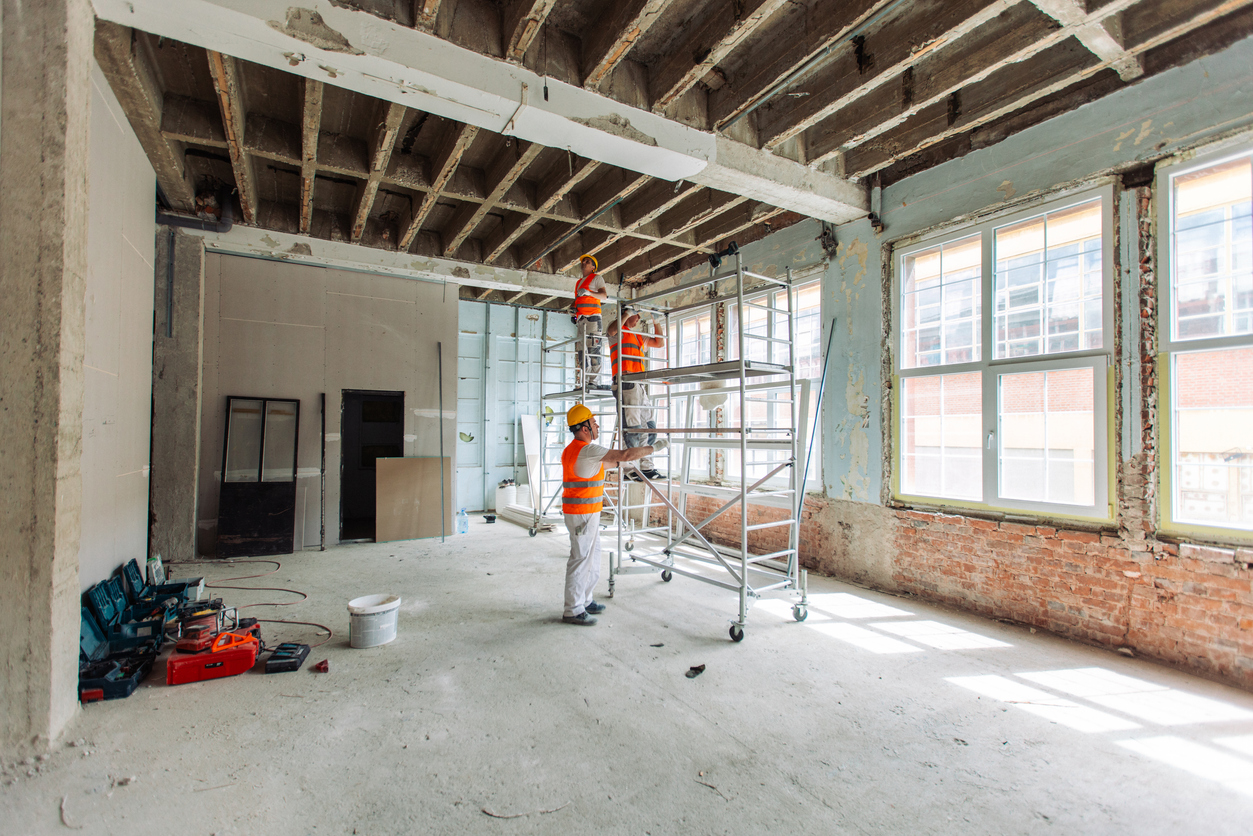
Commercial Renovations
Refurbishment of occupied commercial buildings, planned around the people, services and activities that need to remain in use.
Renewing a building while it stays operational
A live refurbishment starts with understanding occupation patterns, essential services and the condition of the existing fabric. DSJ Construction plans work zones and temporary arrangements with the occupier before disruptive tasks begin.
Strip-out is guided by relevant asbestos surveys undertaken by licensed specialists, with findings informing the scope and sequence. Any required specialist asbestos work is arranged separately before affected areas are disturbed.
Phased works and agreed out-of-hours periods can accommodate M&E upgrades, revised layouts and accessibility improvements. Protection of occupied areas, dust and noise controls, and clear communication about service interruptions form part of the work plan.
Refurbishment work packages
Phased occupation
Divide the building into workable areas with agreed boundaries, temporary routes and release points.
Out-of-hours working
Plan disruptive activities for agreed access windows, with arrangements for reinstatement before normal use resumes.
Survey-led strip-out
Use asbestos-survey findings and existing-condition information to plan removal works without assumptions about concealed materials.
Occupied-area protection
Separate work areas from building users and protect retained finishes, equipment and circulation routes.
M&E upgrades
Coordinate changes to mechanical and electrical systems with isolation, temporary-service and testing requirements.
Accessibility upgrades
Integrate agreed improvements to entrances, circulation, facilities and layouts with the existing building constraints.
Managing refurbishment around occupation
Establish the existing conditions
Review surveys with the design team and occupier, identify retained services and agree investigation requirements.
Agree each work zone
Set the phasing plan, permitted working hours and communication arrangements for occupants before releasing an area.
Control disruptive operations
Coordinate strip-out, isolations and new installations against the agreed protection measures and access windows.
Return areas to use
Inspect reinstated spaces, confirm service readiness and hand back each phase with the relevant updated records.